Niklas


about weingut niklas:
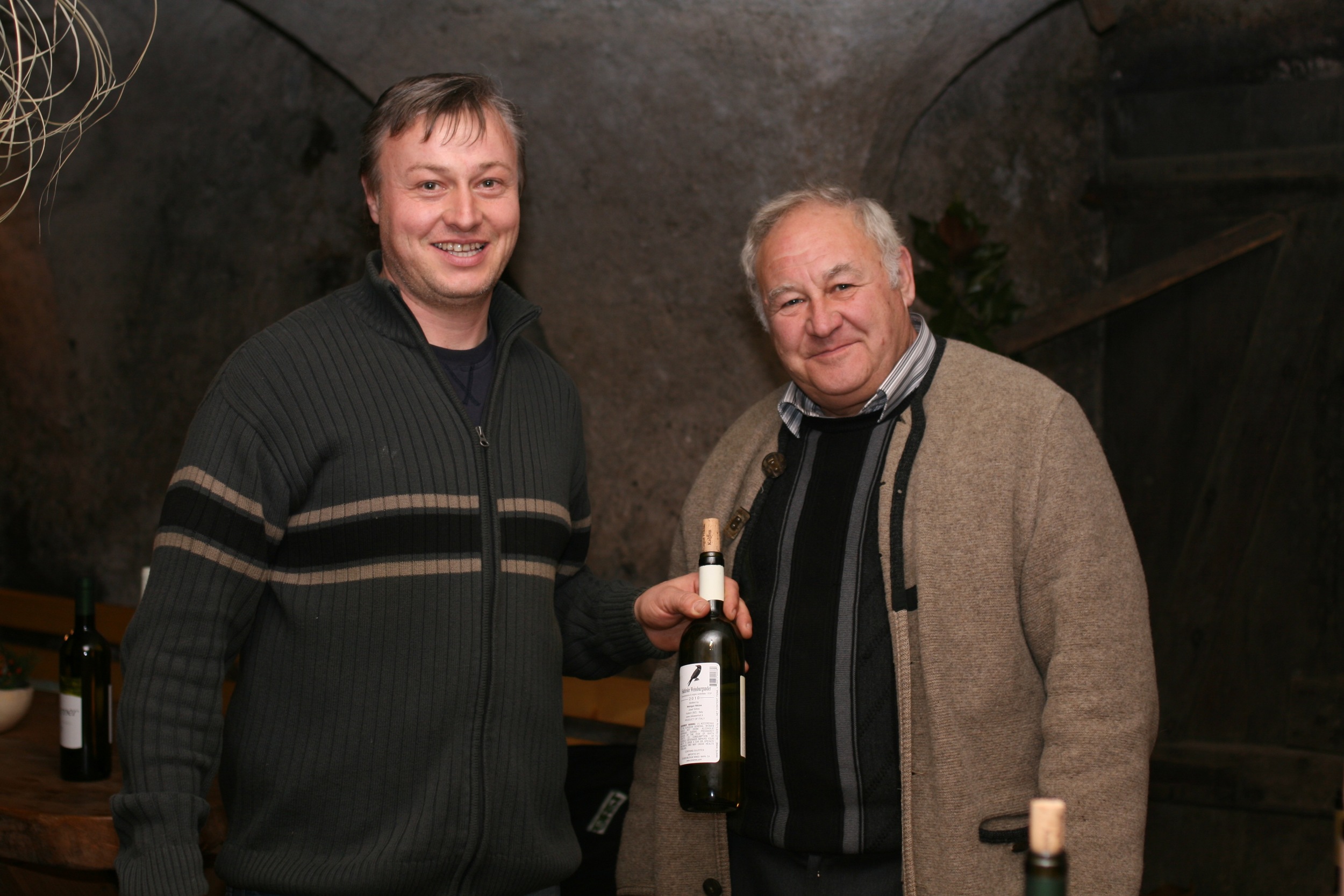
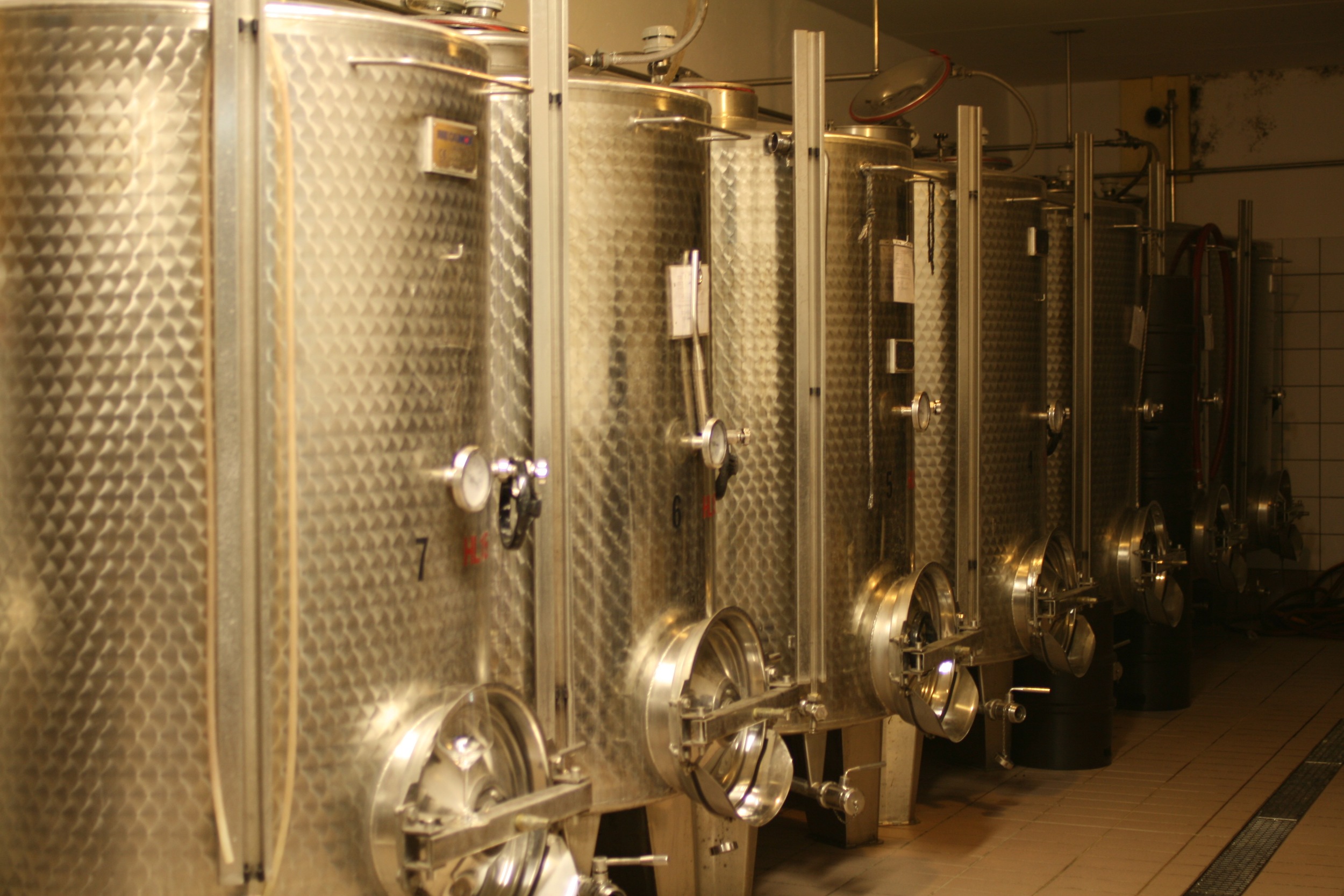
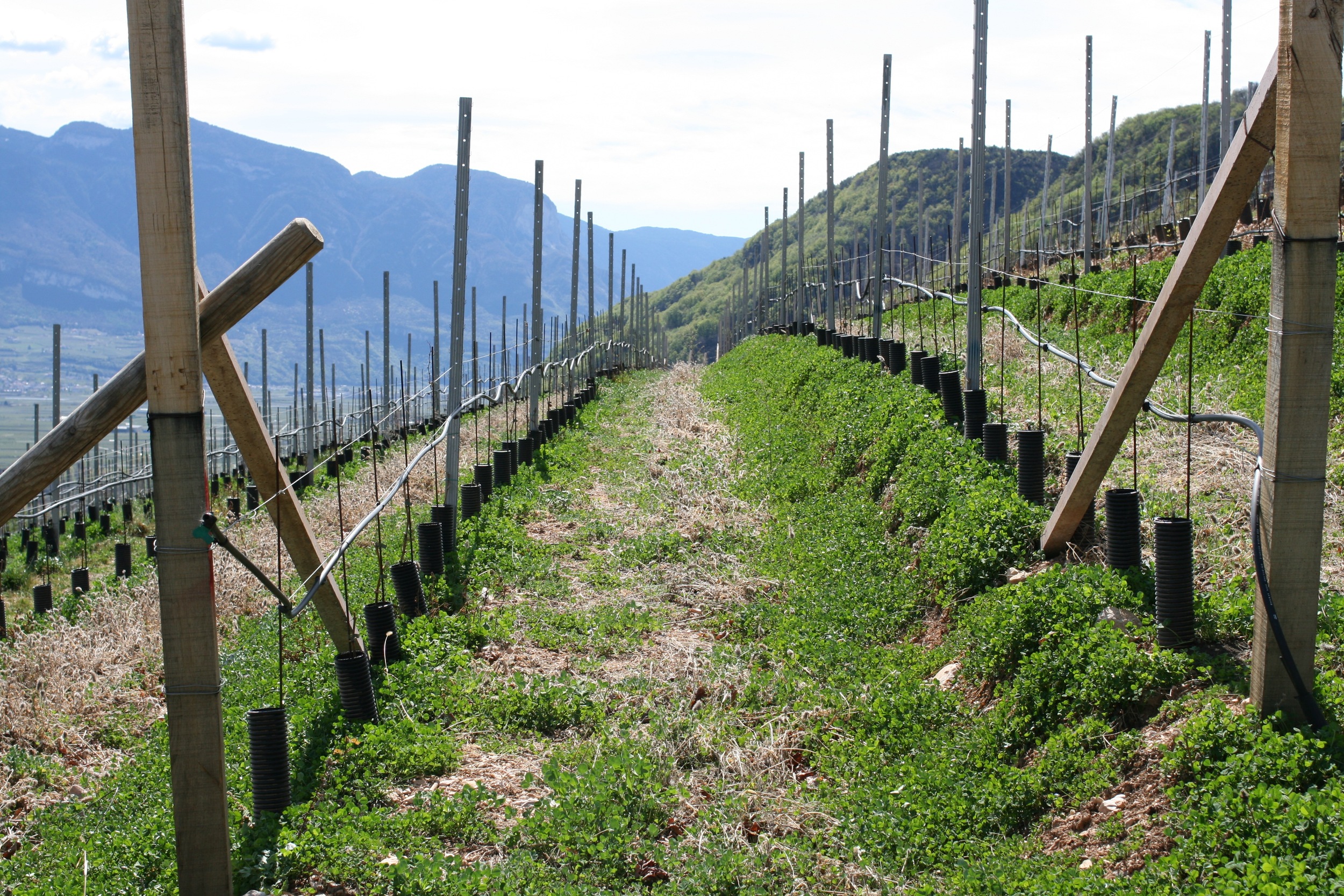
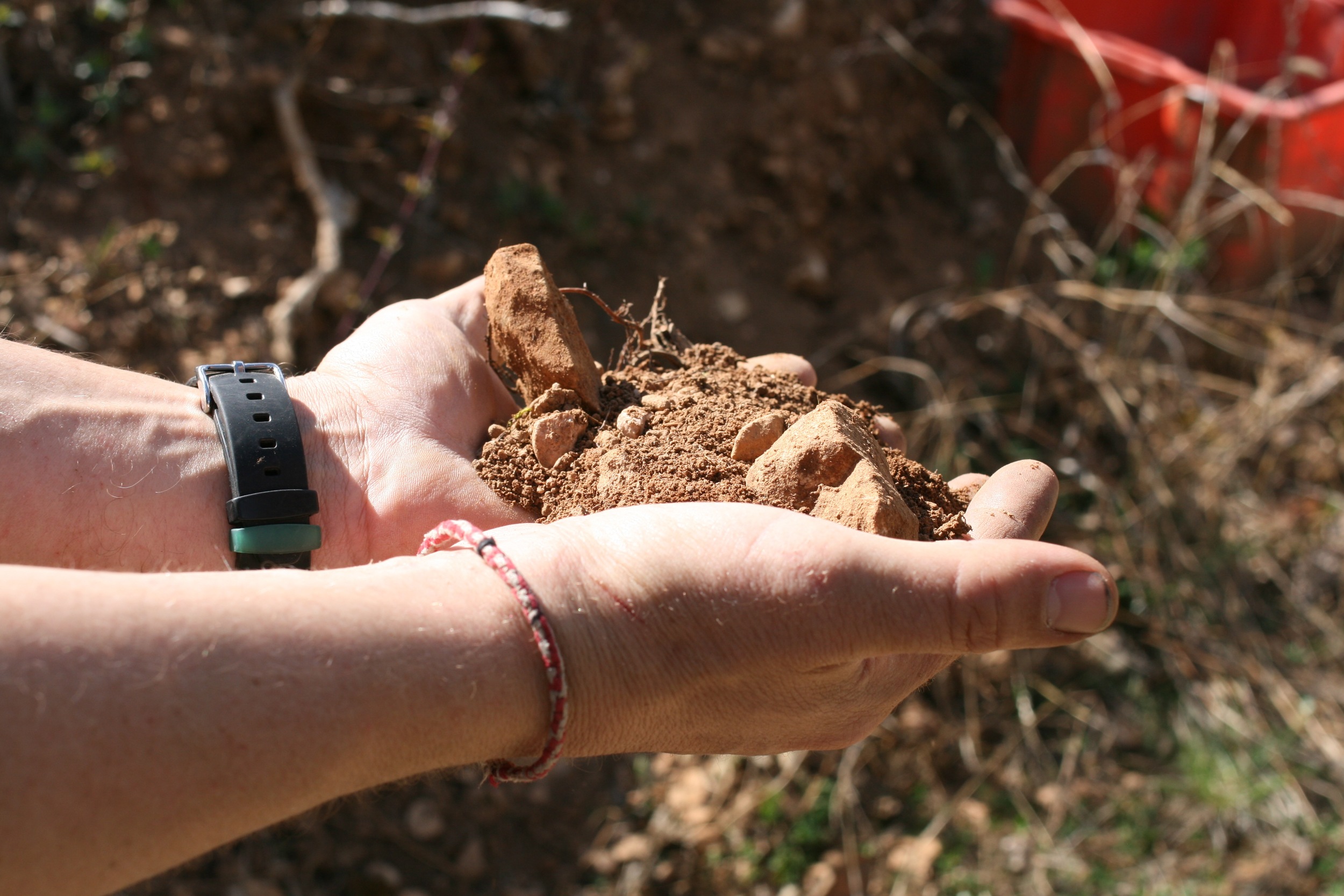
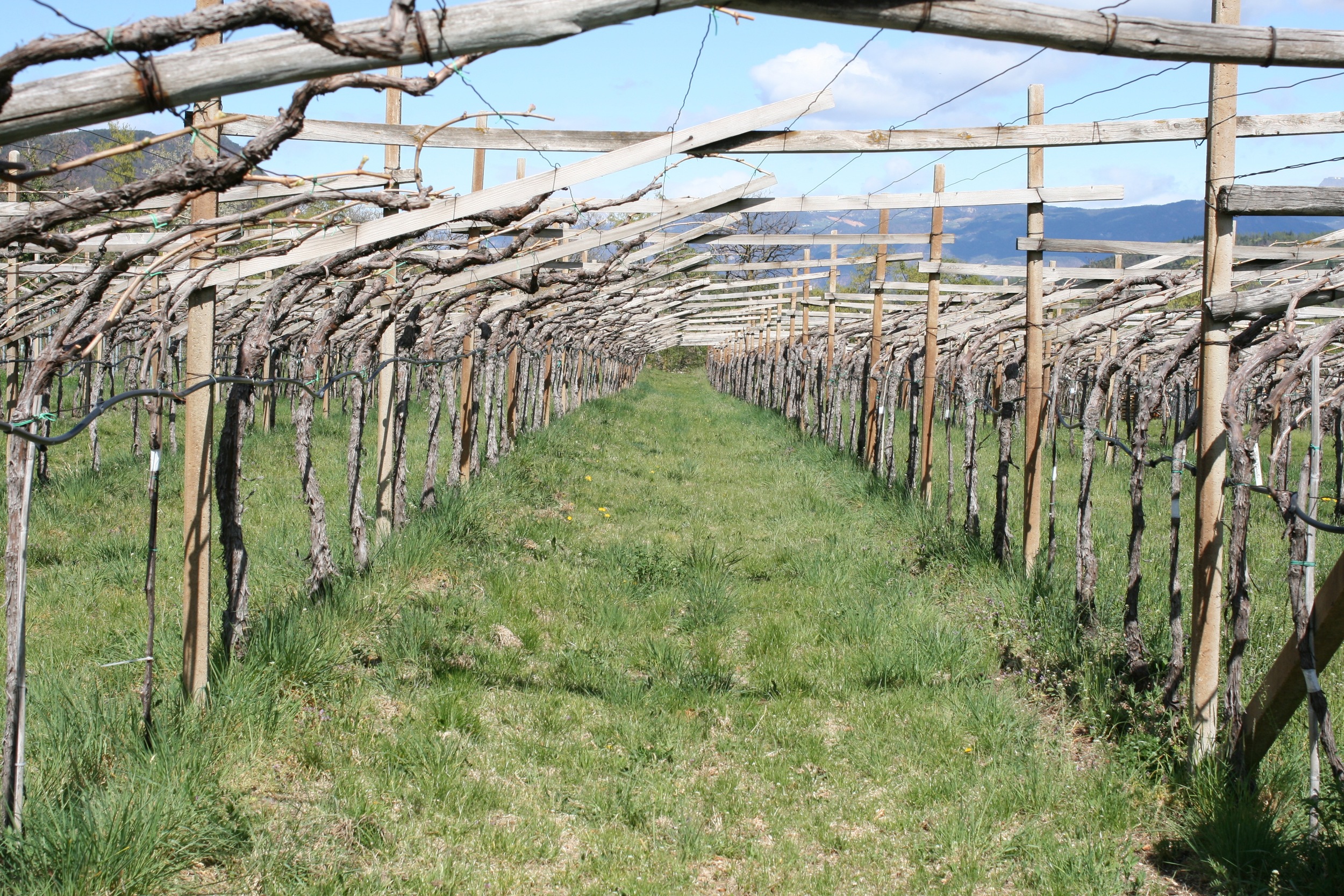
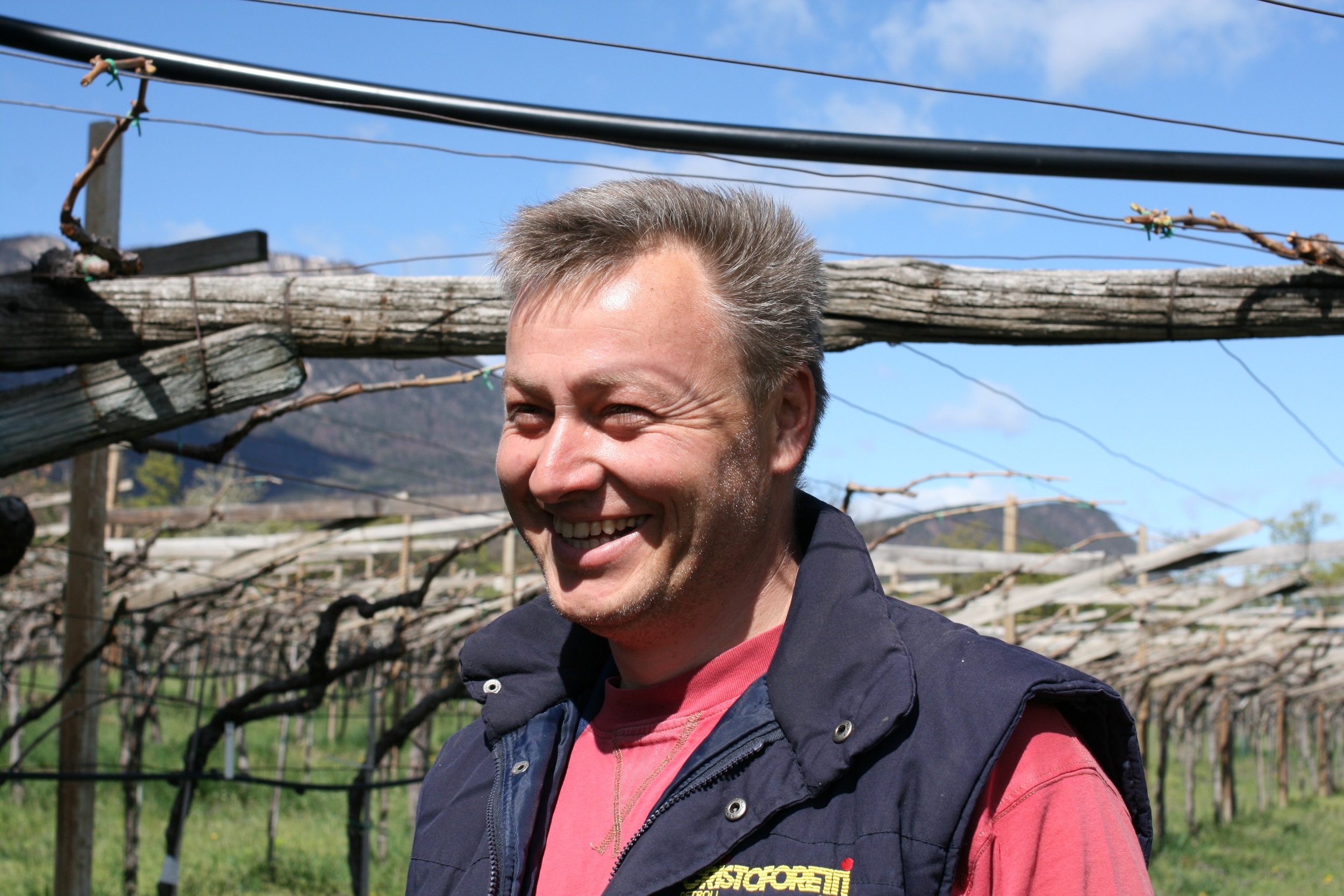
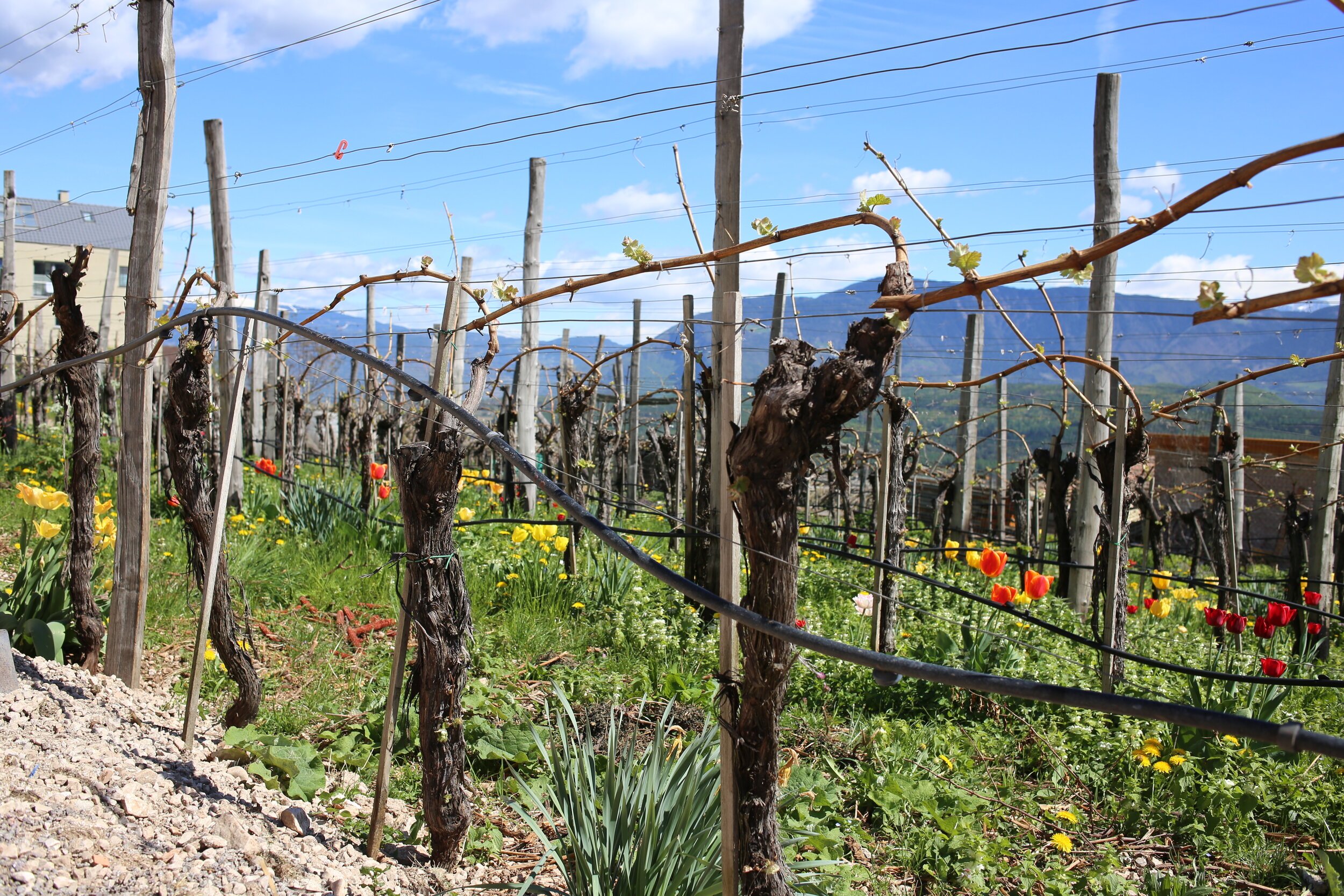
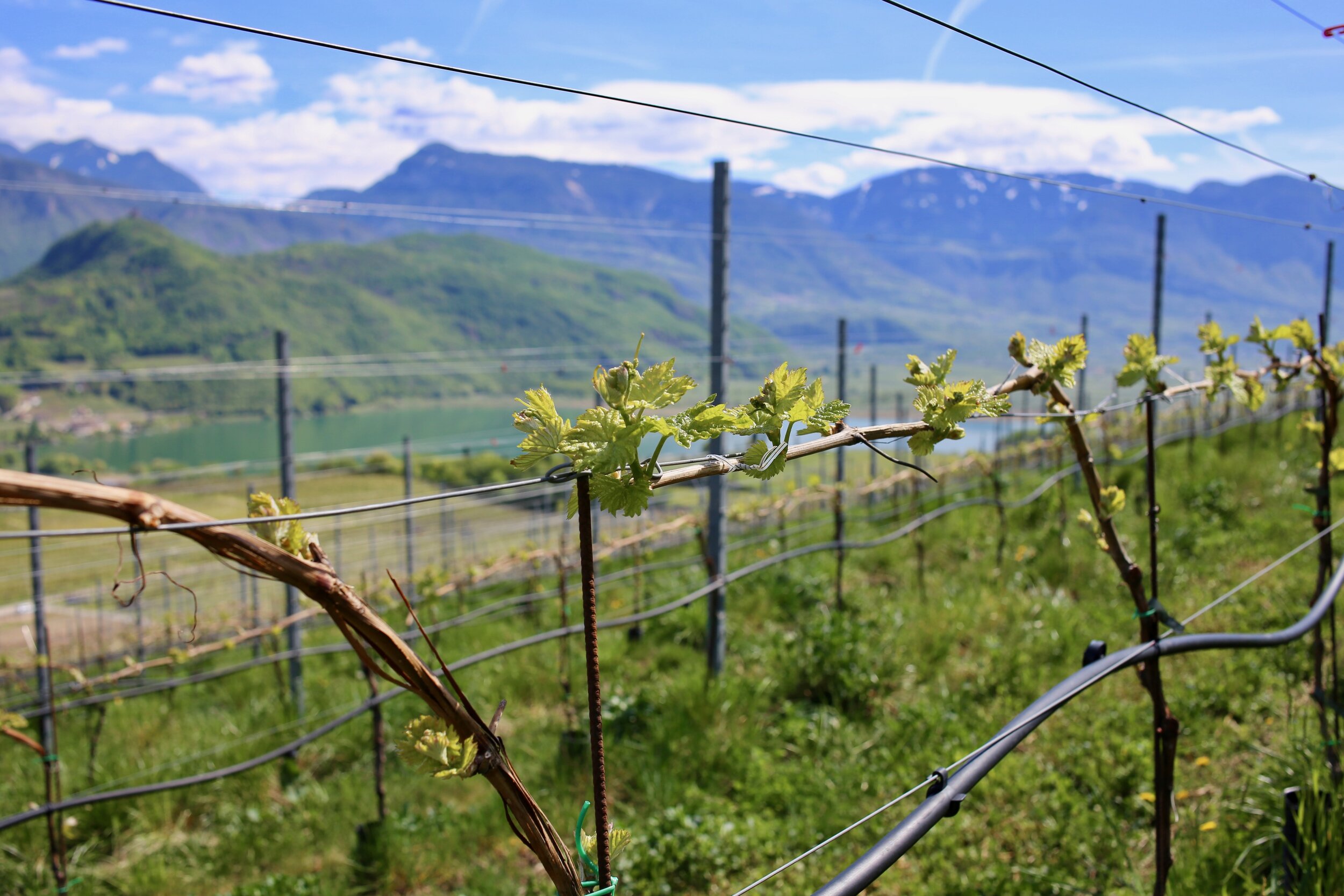
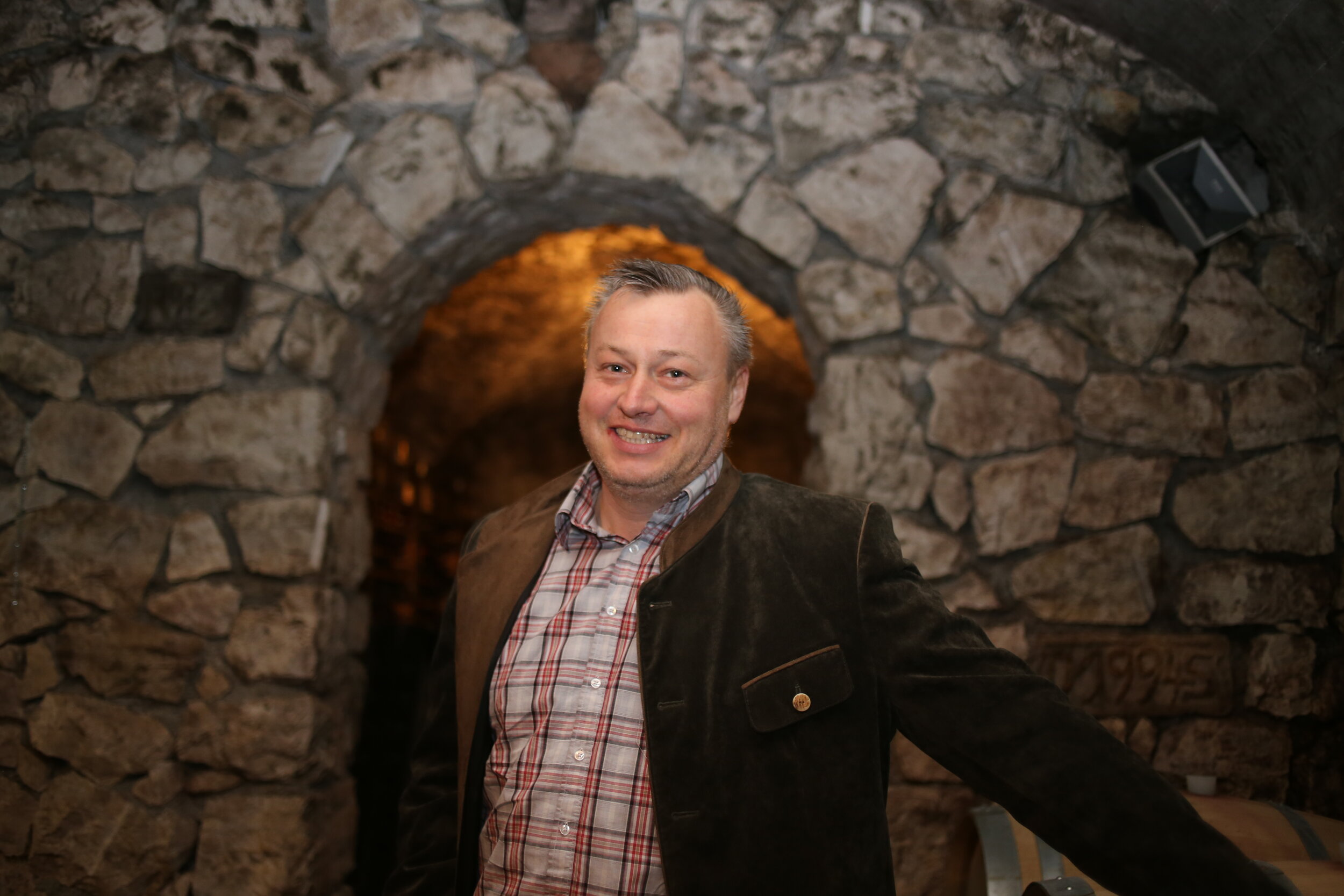
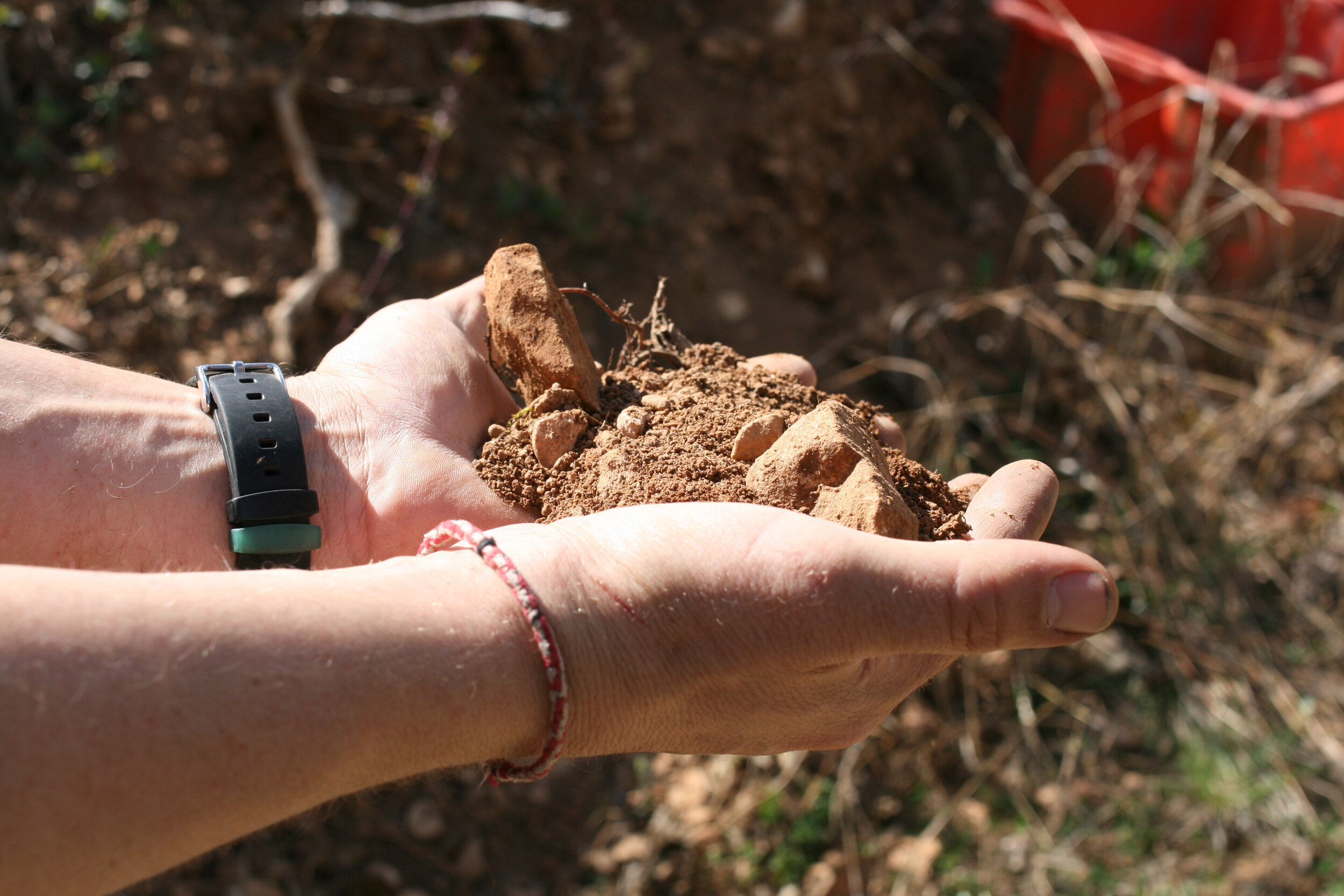
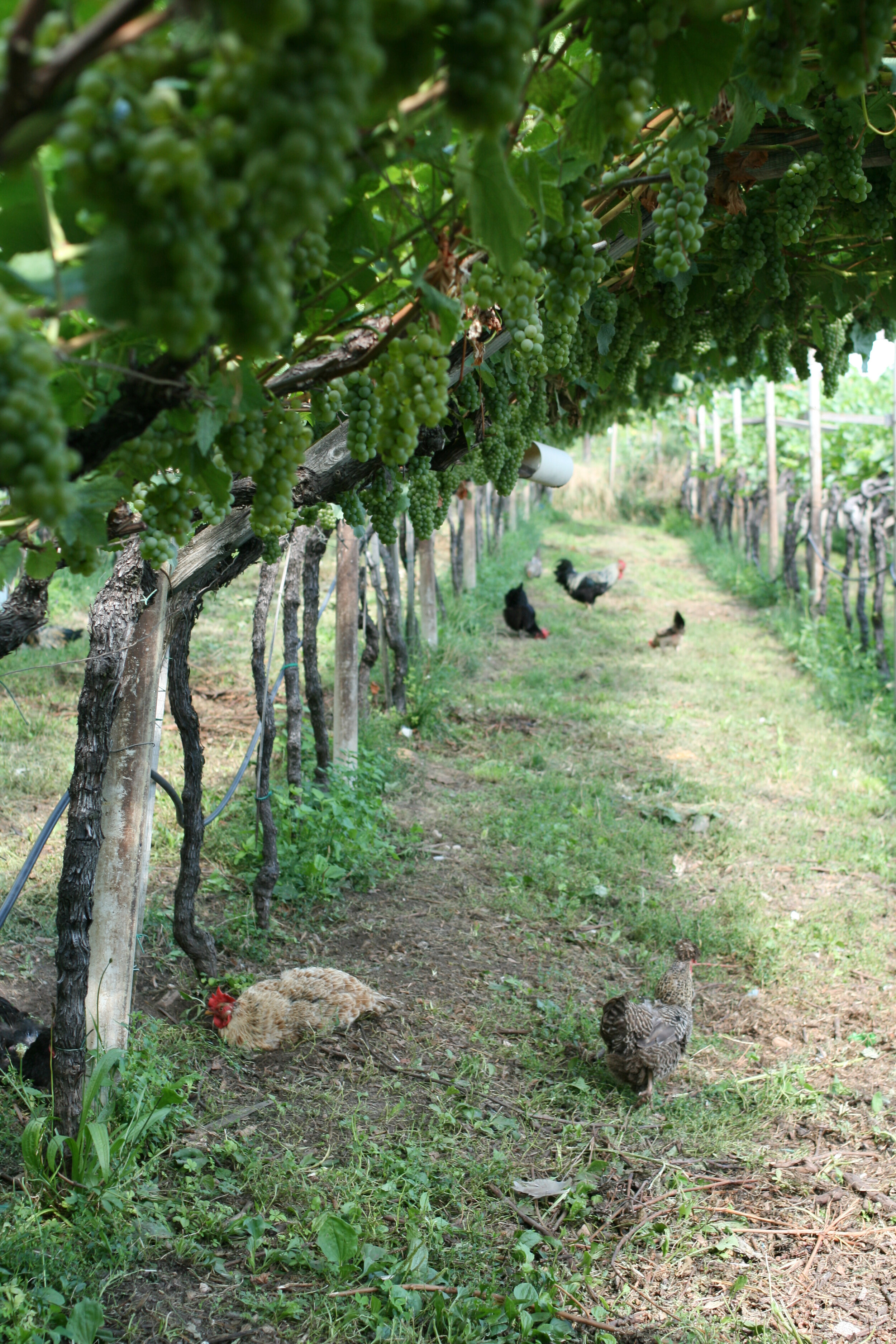
Most of my favorite Italian white wines come from the Alto Adige, the German-speaking region in the far north-east of Italy, just south of the Austrian border. Dieter Sölva is a young winemaker from the tiny village of St. Nikolaus, high up on the west side of a majestic valley that leads north through the Dolomites. The altitude of these vineyards gives the wines an excellent backbone of acidity, even in the atypically hot 2003 vintage; the white wines are vinified in stainless-steel with no malolactic fermentation and no oak, allowing the wine to show the true flavors of the earth. It is very typical of the region that the wines are impeccably clean (Dieter is a graduate of the famous enology school at San Michele, as was his father before him).
_____________________________________________
the wines:
Kerner
From the Oxford Companion to Wine: "the great success story of modern German vine breeding...bred...in1969...from red parent Trollinger (Schiava Grossa) X Riesling. The large white berries produce wines commendably close to Riesling in flavour except with their own leafy aroma and very slightly coarser texture."
Dieter Soelva's father, a well-known viticultural consultant in the Alto Adige, brought the variety from Germany in the 1970s. Thus, the Niklas family vines are the oldest Kerner vines in the region. Dieter's bottlings are vivid, minerally, and as Jancis Robinson rightly observes, show a distinctive herbal quality.
SAUVIGNON
Alto Adige Sauvignon is Italy's best rendition of this variety, showing a lively combination of classic 'green' SB aromas ('elder flower and nettles') and flavors with hints of apricot or white peach. (For Sauvignon fans, the style is somewhere in between Loire and New Zealand examples.) Luscious fruit is balanced by very bright acidity. This works well as a dry aperitif or with a broad variety of antipasti and seafood dishes (and asparagus, a local spring specialty).
WEISSBURGUNDER
Some of the best white wines I’ve had from the Alto Adige have been made from Pinot Bianco aka Weissburgunder, the best examples of which are minerally, earthy wines that repay 3-5 years in the cellar. Niklas’ bottling shows the typical intense minerality with notes of apples and herbs. An excellent food wine, drink it as an aperitif or with pastas, seafood, or light meat dishes.
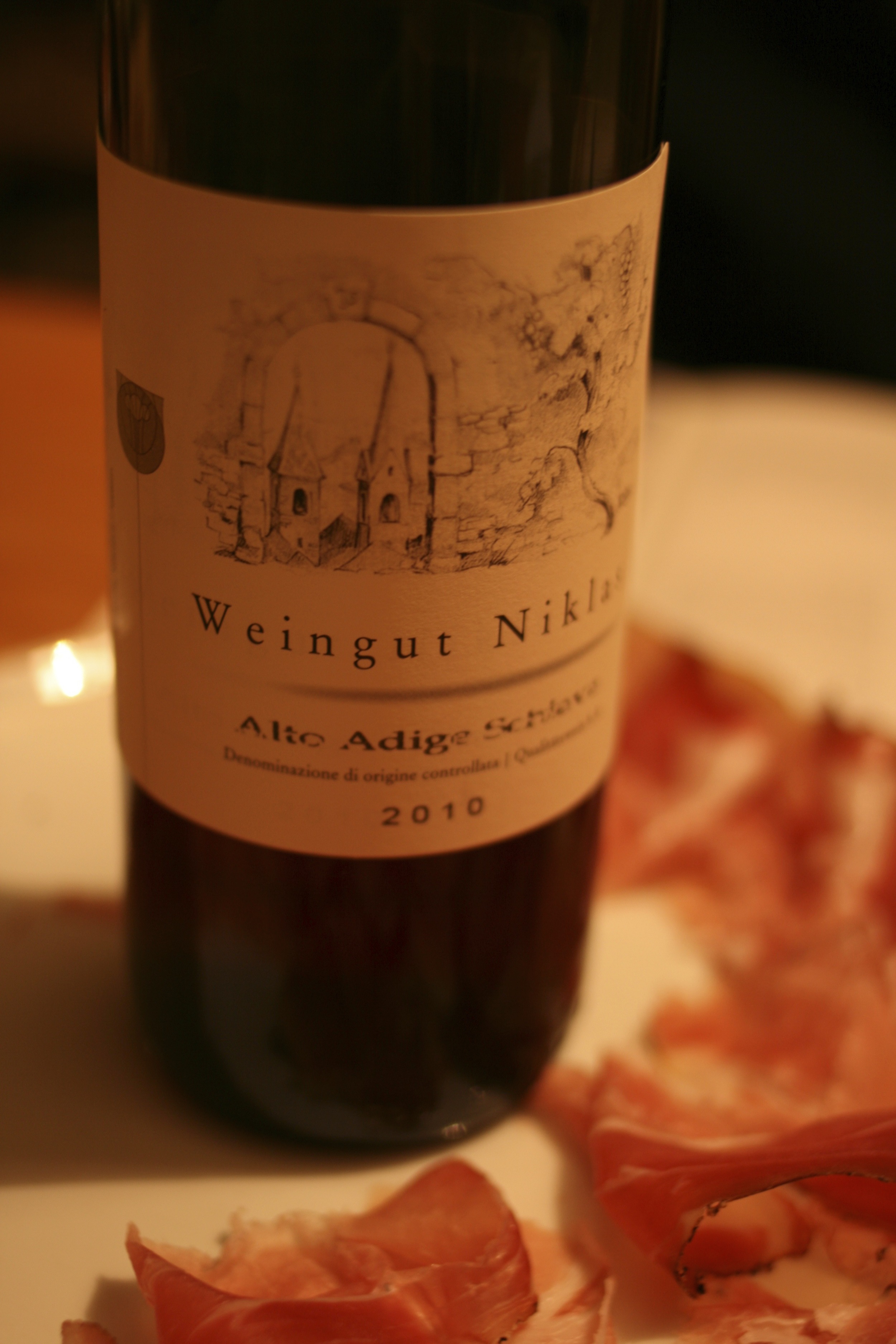
Schiava
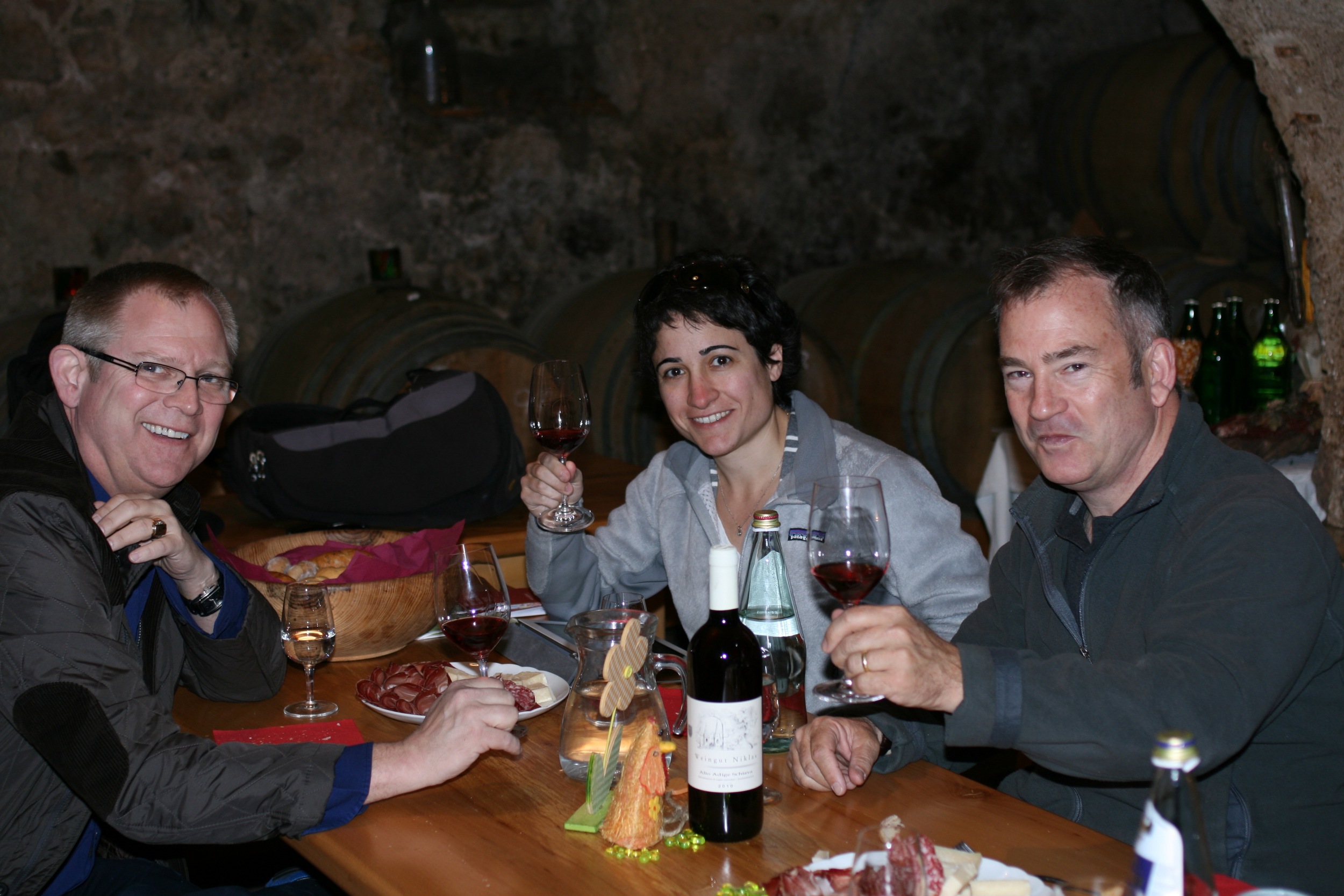
I had been buying excellent Sauvignon, Kerner and Lagrein from Dieter Soelva at Niklaserhof for ages. Every April I would visit Dieter and taste* his excellent light red wine, traditionally called 'Kalterersee Auslese,' and reluctantly decide that however much I liked the wine, the world was not yet ready for an Italian red wine with the word 'Auslese' on the label. Then I found out that the wine could also be labelled with the Italian name of the variety, Schiava, and there was no reason at all not to import it. Fortunately there has been a marked increase in appreciation here in California for lighter, food-friendly red wines, and even a growing appreciation of Schiava, which produces one of the closest Italian equivalents to Beaujolais.
Dieter's Schiava is made of two different types of the Schiava variety (also called Vernatsch or Trollinger) from the vineyards around Lake Caldaro, in the South Tyrol. It is all stainless steel vinification. Pale red in color; aromas and flavors of fraises do bois, herbs, and orange peel. This is a very versatile red wine, particularly in warmer weather; great with cured meats (especially the Tyrolean specialty, Speck), pizza; or grilled chicken, pork, or salmon. Best drunk at cellar temperature, or after 30 minutes in the fridge.
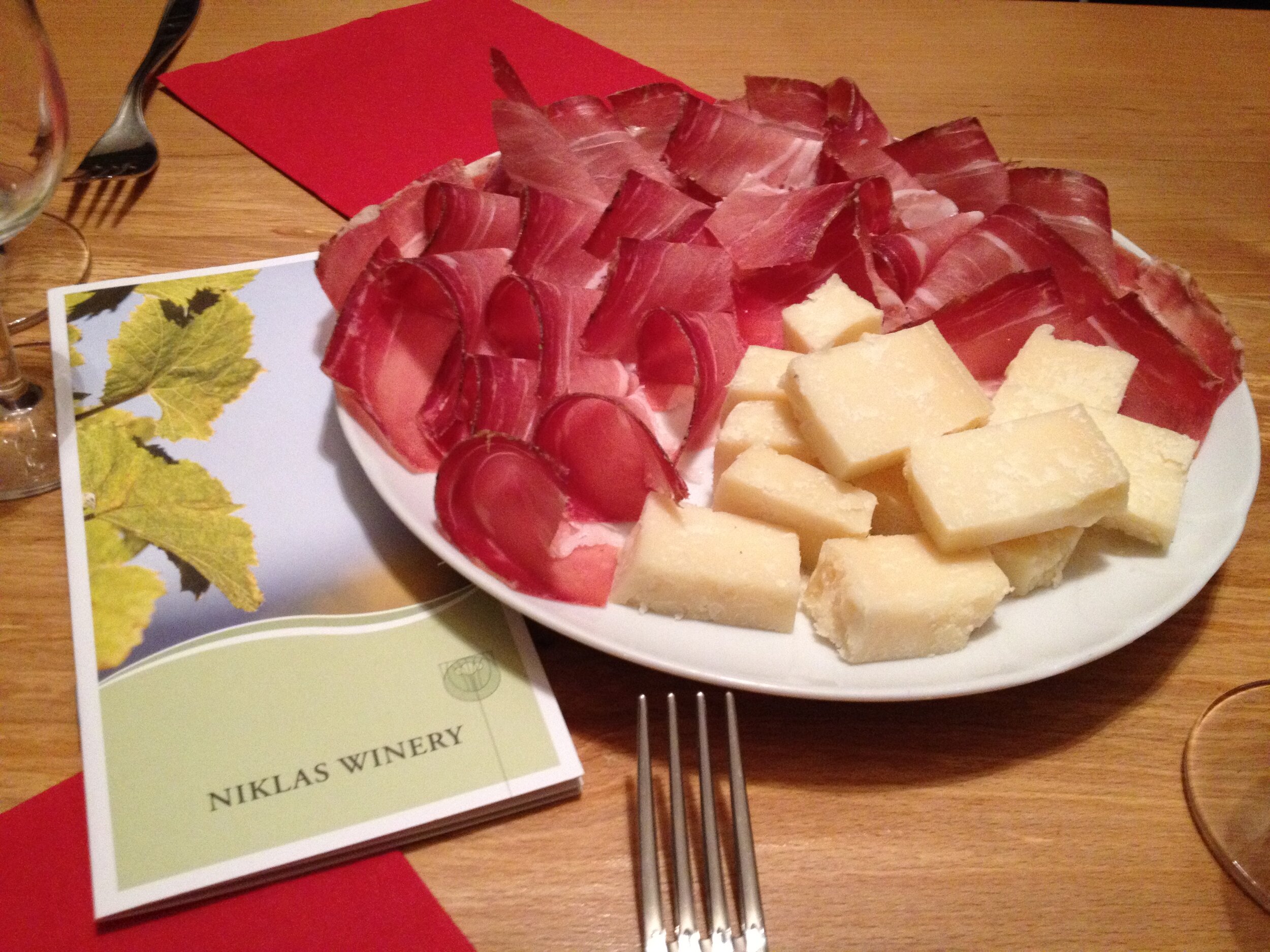
* drink, actually, with a lunch of speck and the excellent local bread
Lagrein
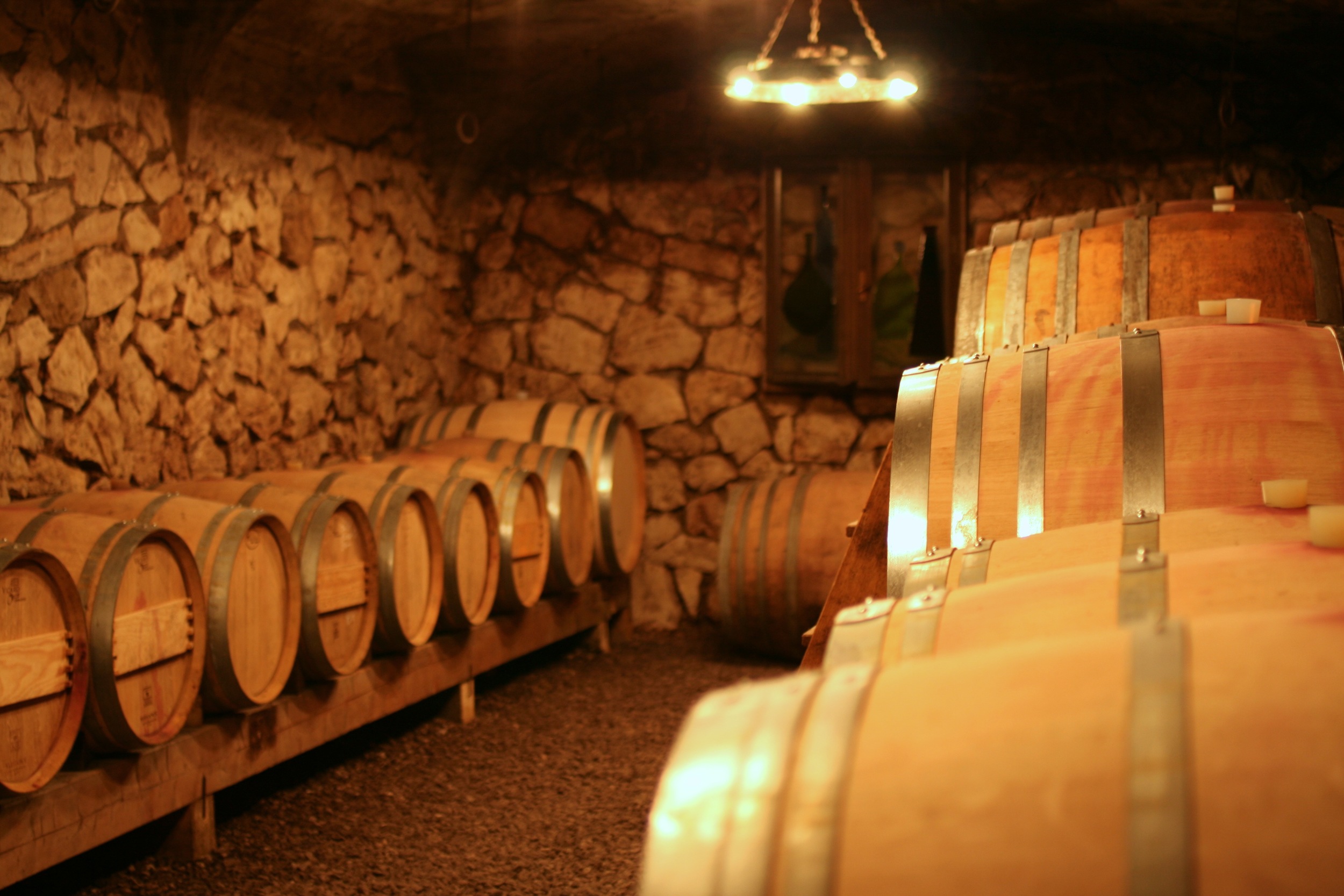
Lagrein is an indigenous grape variety that is used to make a wide range of different wine styles, from rosé ('kretzer') to huge, black-purple reserve wines. Dieter Soelva's example is in the middle, a delicious plummy savory drink with a hint of tannin on the finish and no noticeable oak (it does spend some time in larger neutral wood). These middle-weight Lagreins (that of Thurnhof is very similar) remind me somewhat of ripe Cabernet Franc from the Loire, and they are very useful table wines. It will keep for at least 3 years beyond release but in my experience is best drunk young.